



Key takeaways:
- Eterra Partners enters into a referral partnership with Assent, the leading product intelligence network for the manufacturing industry.
- The partnership primarily targets French companies facing REACH, RoHS and the CBAM.
- Eterra remains responsible for the assessment, the structuring of compliance governance and remediation plans, with human judgment at every stage.
- Assent may be recommended when large-scale supplier data collection exceeds a company's internal capacity.
- This referral partnership is neither exclusive nor a joint structure between the two organizations.
A partnership to address growing regulatory pressure
Eterra Partners has entered into a referral partnership with Assent, the leading product intelligence network for the manufacturing industry. Assent combines the most comprehensive parts and supplier data network on the market with in-depth regulatory expertise and structured operational support, driven by both human expertise and proven workflows.
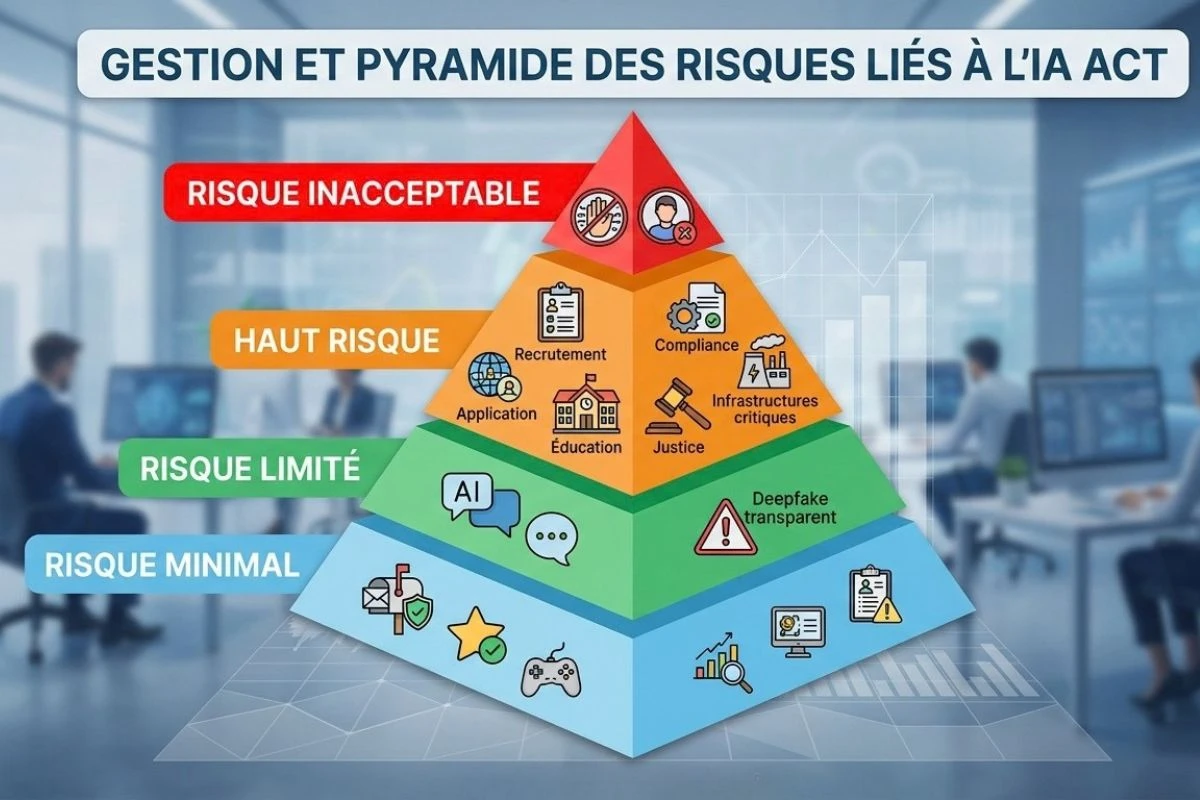
For a company, the first step is therefore to identify its uses of AI, measure their effects and determine their level of risk.
What Assent brings to compliance teams
Assent provides compliance, engineering, procurement and sustainability teams with the information they need regarding materials compliance, product sustainability and responsible sourcing. This enables them to make informed decisions at every stage of the industrial lifecycle, from design to delivery, and beyond.

Growing regulatory pressure on French companies
This partnership primarily targets French companies. Manufacturers, importers and distributors based in France face growing regulatory pressure: REACH, RoHS, CBAM, duty of care, supplier traceability requirements.
Many discover the true extent of these obligations when they block a sale, financing or M&A transaction.
Eterra's role in this partnership
Eterra supports executives, boards of directors and legal departments in assessing this exposure, structuring compliance governance and implementing remediation plans. This work remains driven by the judgment and experience of the Eterra team, not by a tool.
In situations where large-scale supplier data collection or the operational monitoring of product compliance exceeds the internal capacity of a French company, Eterra may recommend integrating Assent, our referral partner, as a component of the solution, when the assessment of the situation justifies it.
Is your company exposed to REACH, RoHS or CBAM without knowing it?
A referral partnership, not an exclusive arrangement
This referral partnership enables the two organizations to refer their clients to each other for the most relevant expertise. It creates neither exclusivity, nor a representation relationship, nor a joint structure between Eterra and Assent. Each organization remains solely responsible for its advice, commitments and recommendations.
The partnership begins with French companies. An extension to other European markets may be considered at a later stage, following a sector-specific approach guided by actual risk signals rather than by isolated regulations.
Learn more about Assent, our referral partner: assent.com
YOUR QUESTIONS
FAQ - Frequently asked questions about the AI Act risk pyramid
Before contacting us, you may have these questions. Here are direct answers from our senior consultants.
—
What is the difference between REACH and RoHS?
REACH governs the registration and assessment of all chemical substances placed on the European market, regardless of the product containing them (communication obligation as soon as a substance of very high concern exceeds 0.1% by mass). RoHS, which is more targeted, restricts the use of certain hazardous substances specifically in electrical and electronic equipment. A company that manufactures or imports electronic equipment may be subject to both regulations simultaneously.
What is the duty of care and which French companies are concerned?
The 2017 French law requires companies employing at least 5,000 employees in France (including in their subsidiaries) or at least 10,000 employees worldwide, for two consecutive financial years, to establish a vigilance plan covering risks related to human rights and the environment throughout their value chain, including suppliers. SMEs and mid-sized companies are not directly subject to it, but are increasingly being asked to provide compliance data to their clients, who are themselves subject to it.
Does CBAM apply to French SMEs?
Not systematically. CBAM applies to importers of certain products, steel, aluminium, cement, fertilisers, hydrogen and electricity, into the European Union. Since the simplification adopted at the end of 2025, a de minimis exemption exempts importers of less than 50 tonnes of covered goods per year from reporting obligations, which excludes a large majority of small importers. Above this threshold, the company must obtain authorised CBAM declarant status and surrender certificates corresponding to the imported emissions.
What is the difference between a compliance consulting firm such as Eterra and a platform such as Assent?
Eterra is a consulting firm: its consultants assess a company’s regulatory exposure, structure its compliance governance and lead remediation plans, with human judgment at every stage. Assent is a technology platform: it automates the collection of supplier data and the monitoring of product compliance at scale. The two are complementary rather than competitors, hence this referral partnership.
What is Assent?
Assent is the leading product intelligence network for the manufacturing industry. The platform combines the most comprehensive market data on parts and suppliers with in-depth regulatory expertise and structured operational support, to help compliance, engineering, procurement and sustainability teams secure their decisions, from design to delivery.